Panel Replacement · Roman Forest
Panel Replacement for Roman Forest's Newer Housing Stock
Roman Forest's homes went up around 2001, later than most of the Spring service area, so the panels and finish on these doors differ from what we replace elsewhere.
What Can Go Wrong
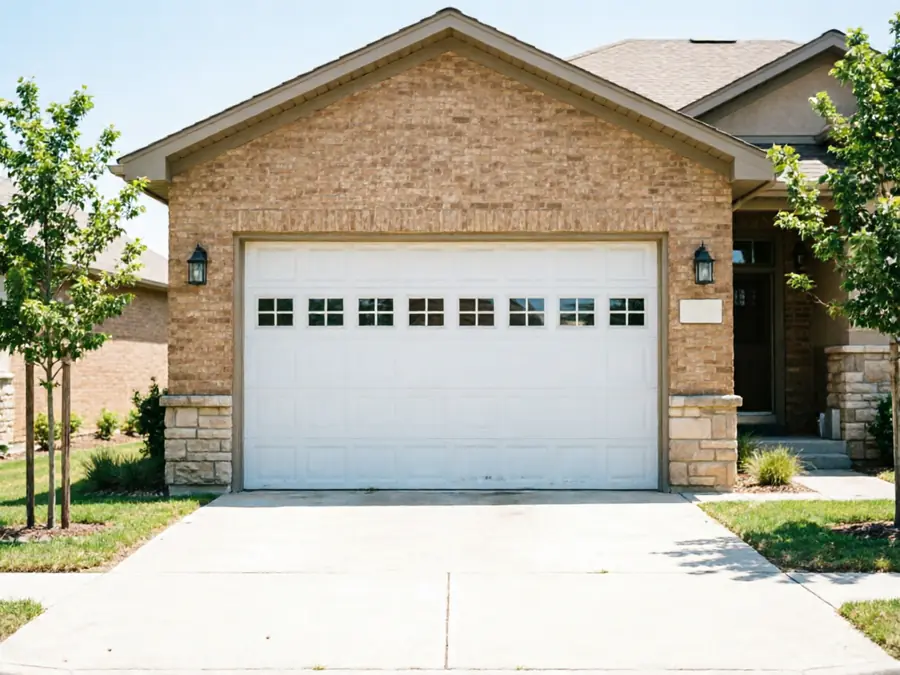
Most homes in Roman Forest went up around 2001, well after the 1971-2011 window that defines the rest of the Spring service area, with a median year of 1989. That later build date matters because doors from that era shipped with factory-finished steel sandwich panels, usually with a polystyrene or polyurethane core bonded between two steel skins, rather than the bare single-layer steel common on older stock closer to Spring's core. The failure mode is different too. On a 2001-era insulated panel, the steel skin can delaminate from the foam core after years of heat cycling, leaving a panel that looks fine from six feet away but flexes and rattles under hand pressure. Denting still happens from a car bumper or a wind-thrown branch, same as any door, but on a foam-core panel a dent can crack the inner skin without breaking the outer paint, which means the damage is easy to miss until the section binds in the track. Hinge pull-through on these panels is also more common than on older solid steel, because the screw holes sit in foam-backed steel that doesn't hold a stripped screw as well as the thicker gauge used two decades earlier.
What You Pay
We don't publish a flat number for panel work here, because the cost depends on whether we're matching one damaged section to an insulated door that's no longer made in that exact profile, or replacing a full set on a door that's otherwise sound. A single-panel match job on a factory-finished insulated door, which is the typical call in Roman Forest, runs higher than a plain steel equivalent would, simply because the panel itself costs more to source and the color match has to account for twenty-plus years of UV fade on the rest of the door. If the manufacturer discontinued that panel profile, which happens on doors from the early 2000s, we're honest about it upfront: sometimes the fix is a full door rather than a hunt for a panel that doesn't exist anymore. We'll tell you which situation you're in before we start, not after.
Why This Fails Locally
With roughly 1,017 households here, replacement jobs are less frequent than in the larger, older pockets closer to Spring's core, but when they come in they tend to follow the same pattern: a foam-core panel that's taken a hit and delaminated rather than simply dented. Median household income in Roman Forest runs $120,313, well above the $82,810 figure for the wider service area, and it shows in the upgrade panels homeowners choose when a section needs replacing - more owners here ask about matching a higher-end insulated profile than a bare economy panel. The climate here sits in the moderate-heat band for this region, which isn't severe enough to crack steel outright, but repeated summer heat cycling is exactly what works a bonded foam-core panel loose from its steel skin over fifteen-plus years. That's a slow failure, not a sudden one, so a lot of these doors are coming due for panel work now simply because of when they were built, not because of any one storm or accident.
How We Fix It
At 16 miles out, Roman Forest sits on the far edge of the area we run from Spring, so we schedule panel jobs out here rather than treating them as a same-day drop-in. The work itself starts with identifying the exact panel profile and finish, since a mismatched insulated panel is more obvious on a 2001-era door than it would be on an older, more weathered one. If the original manufacturer still makes that profile, we order and install a direct match. If they don't, we lay out the honest options: a close aftermarket match, repainting the whole door to blend a slightly different panel, or full replacement if the door's old enough that chasing one section doesn't make financial sense. We don't guess at a part number over the phone - matching foam-core panels from this era takes an in-person look at the door before we quote anything.
FAQ
Questions about this
Why does my dented panel feel hollow compared to older steel doors?
Doors built around 2001, which is typical for Roman Forest, use a steel skin bonded over a foam core rather than solid steel. A dent on these can crack the inner skin without visibly damaging the outer paint, so the panel feels softer or flexes even when it looks okay from outside.
Can you match just one panel on my insulated door?
Often yes, if the manufacturer still produces that profile and color. If the door is old enough that the exact panel's been discontinued, we'll tell you that upfront rather than order something that won't match, and talk through whether a full door makes more sense.
Do you have a crew based in Roman Forest?
No. We run jobs here from Spring, about 16 miles away, so panel work in Roman Forest is scheduled rather than same-day drop-in work.
Tell us what your door is doing.
We serve Spring, TX and nearby communities. Every job starts with a diagnosis, so you know what failed before any work begins.