
Cable Repair · Woodbranch
Cable Repair for Woodbranch's 1980s Garage Doors
Cable repair for Woodbranch's early-1980s steel sectional doors, serviced from Spring. We know the extension-spring hardware this stock still carries.
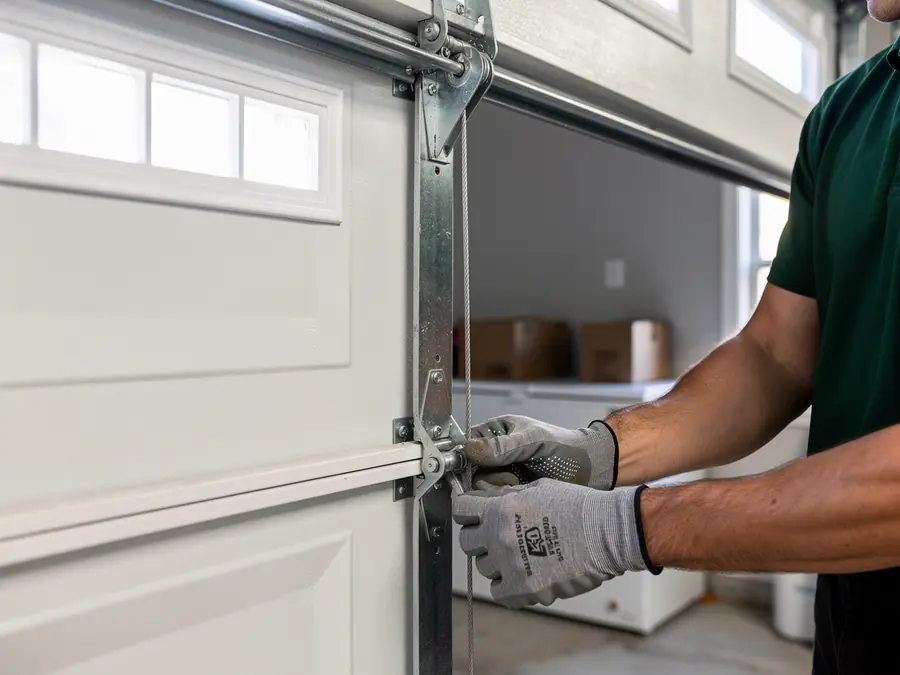
How We Fix It
Most houses in Woodbranch went up around 1982, which puts the garage doors squarely in the steel sectional era - 16x7 double doors and 9x7 singles, hung on galvanized lift cables running to extension springs mounted along the horizontal tracks rather than the torsion tubes you see on newer builds. When one of those cables frays or snaps, the door usually drops crooked on one side, or it won't lift past a few inches before the opener strains and stalls.
We pull the old cable off the drum and pulley, check the extension spring it's paired with for stretch or rust pitting, and run a new galvanized cable sized to the door's weight and track length. If the pulley or bottom bracket shows wear from the broken cable whipping around, we swap those too rather than put a new cable through worn hardware. On a double door, we always check both cables even if just one failed, because they carry the load together and age at close to the same rate.
We don't recommend patching a cable that's already stretched past spec - a spliced or re-tensioned cable on a door this size is a problem waiting to happen, and we'll say so if that's what's on your track.
Time on the Job
A single snapped cable on one of these 1980s sectional doors is usually a straightforward swap once we're on site: drop the door safely, release spring tension, pull the old cable, run the new one, and re-tension. Where it runs longer is when the drum or bottom bracket has been damaged by the cable coming off mid-cycle, which happens more often on the wider 16-foot doors common on Woodbranch's double-car garages than on the narrower singles.
We travel to Woodbranch from Spring, about 14 miles out, so we schedule the trip rather than treat it as a drop-in call. That's worth knowing if you're trying to plan around it - we're not based in town, so same-day isn't something we promise here, though we'll give you a straight window when you call.
Heat is a factor worth naming even though it's not the dramatic one. This area sits in a moderate heat band, and cables that run through a hot garage for 30-plus years develop dry rot inside the strands that you can't see from outside. That's part of why a cable on a door this age sometimes fails without warning, even if the door looked and sounded fine the week before.
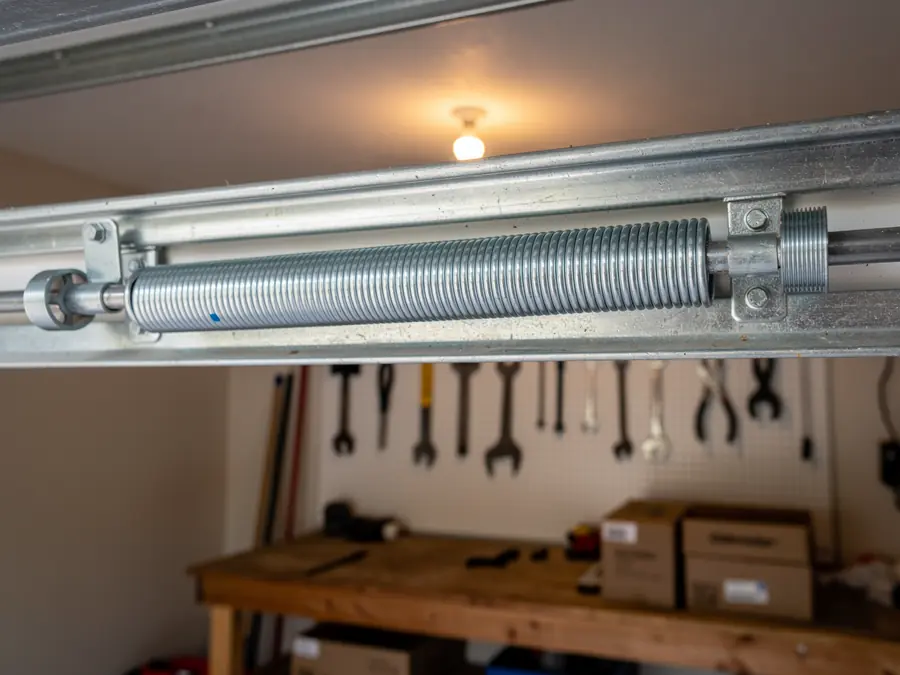
Why This Fails Locally
The housing stock across this service area runs from 1971 to 2011, with the heaviest concentration in the 1980s and 90s, and Woodbranch sits right in that band at a median build year of 1982. That matters for cable failure specifically: doors from this era were built with extension-spring systems and lighter-gauge cable than what's standard on torsion-spring doors installed today. Over four decades, that original cable has usually been replaced once or never - and if it's never been replaced, it's well past the point where fraying is a surprise.
With roughly 558 households in Woodbranch, this isn't a community with a lot of garage door turnover; people tend to keep the door that came with the house until something breaks. That means a lot of original or near-original hardware still in service, and cable is usually the first thing to go because it's thinner than the springs and takes the most direct abrasion against the drum and pulley edges every time the door cycles.
Stocked Parts
We carry galvanized lift cable in the lengths and gauges that match 9x7 and 16x7 sectional doors, which covers the great majority of garage doors on houses built in Woodbranch's era. We also stock the pulleys and bottom brackets that commonly need replacing alongside a snapped cable, since a cable swap on worn hardware doesn't hold.
What we don't keep on the truck is anything specialty - oversized commercial doors, unusual historic hardware, or cable gauges outside the standard residential range. If a door turns out to need something non-standard, we'll tell you on site rather than guess, and order it rather than force a fit that won't last.
FAQ
Questions about this
How do I know if it's the cable and not the spring?
If the door drops unevenly, hangs crooked, or you can see a frayed strand of wire near the bottom bracket or drum, that's cable. If both sides of the door seem fine but it won't lift at all and feels heavy, that points more toward the spring. Either way, don't force the opener - call it in before the cable fully parts.
Is my 1980s door's cable original?
We can't tell you without looking, but on a house built around 1982 it's common for the cable to have been replaced zero or one times in over forty years. If you've never had it serviced, assume it's original and due.
Do you have a crew based in Woodbranch?
No. We run out of Spring, about 14 miles away, and schedule Woodbranch calls as a trip out rather than a local drop-in. We'll give you a real time window when you book, not a same-day promise we can't back up.
Can a stretched cable just be re-tensioned instead of replaced?
Not on a door this size. A cable that's stretched has already lost strand strength, and re-tensioning it just moves the slack somewhere else on the drum. We replace rather than patch - it's the only fix that holds.
Tell us what your door is doing.
We serve Spring, TX and nearby communities. Every job starts with a diagnosis, so you know what failed before any work begins.