
Panel Replacement · Jersey Village
Panel Replacement for Jersey Village's 1990s Steel Doors
Spring Garage Door Co replaces steel sectional panels on the 1991-era doors common in Jersey Village, 16 miles from our shop, matched to original hardware and sizing.
How It Shows Up
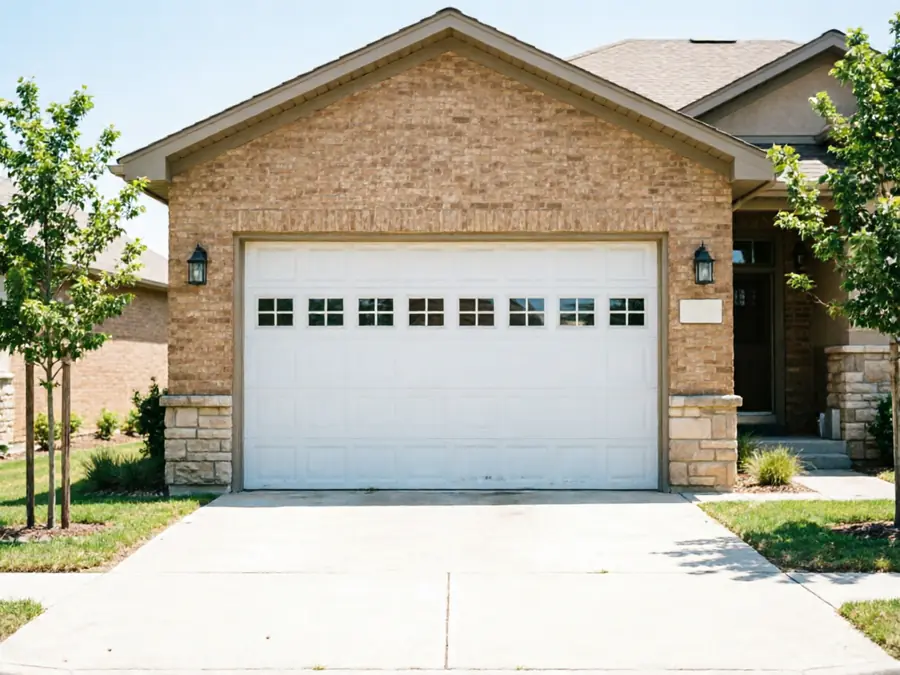
Most garage doors in Jersey Village went in around 1991, which puts them squarely in the era when builders switched from wood to galvanized steel sectional doors with short raised panels and a light wood-grain stamp. These are usually 16x7 double-car doors or 8x7 singles, two or three horizontal sections high, with a baked-on enamel finish that was never meant to flex. After thirty-plus years, the panel skins oxidize from the inside out where the foam backing holds moisture, and you'll see bubbling or a soft chalky rust line along the bottom section first, usually near the corner where water sits after rain. A dent from a backed-into car doesn't flatten back out on steel the way it did on the older wood doors - it creases the rib pattern permanently, and that crease spreads a hairline crack over a few seasons of Texas heat cycling the metal. On a 1991 door, that bottom panel is almost always the first one to go, well before the opener or the springs show any trouble.
Time on the Job
We come out from Spring, about 16 miles down to Jersey Village, so we schedule panel work rather than treat it as a same-day drop-in. A single-panel swap on a standard double door usually runs one visit once we've confirmed the match - steel gauge, rib profile, and section height all have to line up with the 1991-era hardware still on the track, since newer panels are cut to slightly different specs. Matching an exact color and panel style from that period sometimes means we're pulling from a limited stock of older-profile sections, and if your door's discontinued, we'll tell you that up front rather than string you along with a part that'll never blend in. We're honest that a full repaint to hide a seam is sometimes the better call than hunting for a dead match.
Doing It Yourself
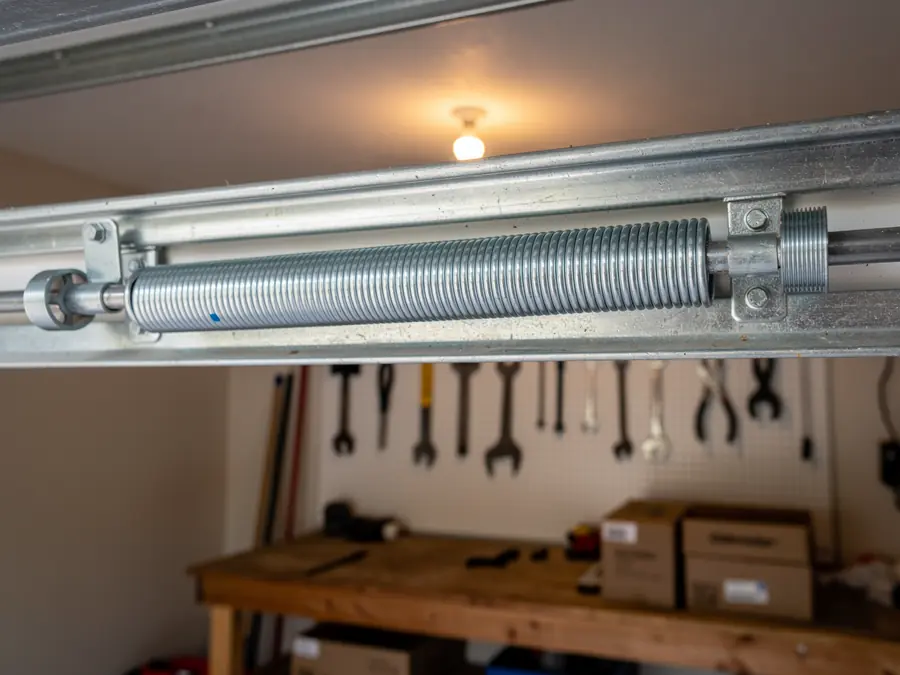
Swapping a single steel panel on a sectional door is within reach for someone comfortable with a ratchet and a torsion spring left alone - the hinges and roller brackets unbolt from the old section and rebolt onto the new one without touching the spring system. Where people get hurt is on the bottom panel, which carries the bottom bracket and the cable attachment; loosen the wrong bolt with the door down and the spring tension has nowhere to go but into your hands. If your door is a double 16-foot panel from the early '90s, it's heavier than a modern insulated door of the same size, which means more stored energy in that spring when you're working near the bottom section. We'll walk you through which panel positions are reasonable DIY and which ones we'd rather you call for - the honest answer is it depends on which section is damaged, not a blanket rule either way.
What Can Go Wrong
With Jersey Village sitting at a median household income of $93,983, a lot of homeowners here ask for full-door replacement instead of patching a single panel, and sometimes that's the right call - once two or three sections on a 1991 door show rust-through, piecing in new panels one at a time stops making financial sense. The risk on the DIY side is mismatched panel thickness throwing off the track alignment, which binds the rollers and chews up the opener's drive gear within a few months. We also see non-insulated 1990s doors that owners want to upgrade with modern insulated panels on an old frame - the added weight needs a spring recalculation, not just a panel swap, or the door won't lift evenly. That's a job we handle, but it's a different quote than a straight panel match.
FAQ
Questions about this
Will a new panel match the color on my 1991 door exactly?
Not always. Enamel finishes from that era have faded and chalked differently depending on sun exposure, so a factory-fresh panel can look slightly brighter than the rest of the door for a season or two until it weathers in. We'll show you the panel before installing it so there are no surprises.
Why does the bottom panel rust out first on older steel doors?
It sits closest to ground moisture and catches splashback during rain, and the foam backing behind the steel skin traps that moisture against the metal instead of letting it dry. On a door built around 1991, that section has usually taken thirty-plus years of that cycle before anything else on the door shows wear.
Is it cheaper to replace one panel or the whole door?
One panel costs less upfront, but if your door is from the early '90s and other sections are close behind the damaged one in age and wear, full replacement can be the better value over a five-year horizon. We'll look at the whole door, not just the damaged section, before quoting either way.
Do you carry panels for older steel doors in stock?
Not all profiles - some early-90s panel styles are discontinued by the original manufacturer, and we source what we can, but we won't promise an exact match sight unseen. We'll tell you before the job if we think the color or rib pattern won't line up.
Tell us what your door is doing.
We serve Spring, TX and nearby communities. Every job starts with a diagnosis, so you know what failed before any work begins.