
Roller Replacement · Jersey Village
Rollers Wearing Out on an Early-1990s Jersey Village Door
Jersey Village homes built mostly in the early 1990s still run original steel rollers on steel track. Spring Garage Door Co replaces worn rollers without a full rebuild.
How It Shows Up
Jersey Village's housing mostly went up around 1991, square in the middle of the service area's broader 1971-2011 build-out. Doors from that era came standard with ten galvanized steel rollers per door, riding in raw steel track with no sealed bearing and no nylon anywhere near the hardware. That's not a flaw, it's just what a builder-grade door shipped with back then.
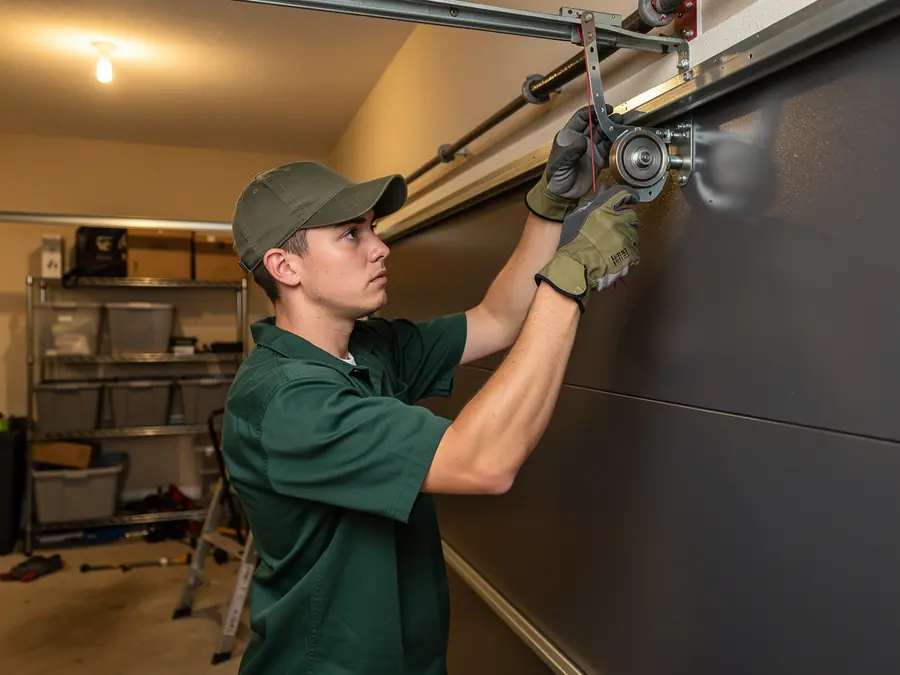
Thirty-plus years on, those steel rollers are usually the first thing to go. You'll hear it before you see it: a grinding or popping sound as the roller stem works loose in its bracket, or a door that hesitates and jerks at the same spot on the track every time. Look closely at the track itself and you'll often find a worn groove or a dull gray streak where a flat-sided roller has been scraping instead of rolling for months.
The area sits in a moderate-heat climate band, and that matters more than people expect. Grease on steel rollers dries out and gums up with dust faster on a south-facing door that takes sun most of the day, which speeds up the wear you're hearing. A door on the shaded side of the same house can run another year or two on the same original rollers.
Time on the Job
We travel from Spring to reach Jersey Village, about 16 miles each way, so a roller job here gets scheduled rather than squeezed in between calls closer to the shop. Once we're on site, the work itself is straightforward: we run the door, listen and watch for the specific roller or rollers that are binding, then pull the full set rather than swap just the loud one, since the other nine are usually close behind on an original 1991-era door.
Matching roller stem length and track radius matters more on older stock than people assume. A roller sized for newer, lighter track can rattle loose in an older steel channel built to a different tolerance, so we check the track profile before ordering anything.
We also check the track brackets and hinges while we're in there, since on a door this age it's common to find a bent bracket or an elongated hinge hole contributing to the same noise you called us about. Replacing rollers without fixing the bracket underneath it just brings the same call back in a few months.
Doing It Yourself
Swapping the bottom rollers on a garage door isn't out of reach for a homeowner with a ladder and a pair of pliers, especially on a door that still has its factory steel brackets in good shape. The bottom rollers sit away from the spring and carry light brackets you can usually unbolt one at a time without the door going anywhere.
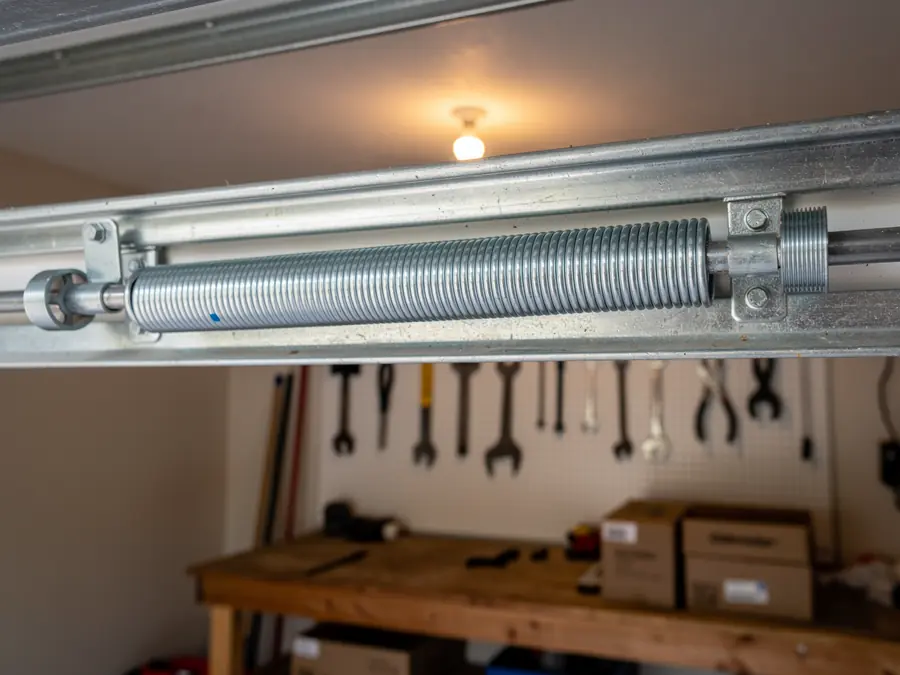
The top two rollers are a different story. On a door from the early 1990s, those top brackets are often bolted through the same track section the spring system pulls against, and working up there with the door raised means working near a loaded torsion spring. We don't recommend it as a DIY step, and we won't talk anyone through doing it over the phone.
One honest limitation: we don't stock every roller length and bracket style for a door this old on the truck. If your track hardware turns out to be a nonstandard size, we may need to order the exact bracket rather than force a close-enough fit, which can push a same-visit job into a return trip.
What Can Go Wrong
The most common mistake on a house this age is replacing rollers but leaving the track alone. If the track has worn into an oval shape where the old steel roller rode, a brand-new roller will still bind in that same spot, and the noise comes right back within weeks.
Jersey Village's median household income runs well above the wider service area's figure of $82,810, and in practice that shows up as more doors here already carrying an upgraded opener bolted onto original 1990s roller hardware. Nylon rollers get installed to quiet the opener down, without anyone checking whether the track itself is still true. A quiet motor doesn't fix a bent rail.
Sealed-bearing nylon rollers also don't love direct heat the way people assume. On the moderate-heat band this area sits in, a nylon roller on an unshaded south wall can glaze and crack years before the same roller on a shaded door. If a roller keeps failing in the same spot no matter what you put in it, the track or the bracket is usually the real problem, not the roller.
FAQ
Questions about this
Why do my garage door rollers keep making noise even after I oiled them?
On a door from the early 1990s, noise that comes back after lubrication usually means the roller stem or the track groove is worn, not just dry. Oil quiets a roller down temporarily but can't fix a roller that's gone oval or a track that's worn a channel. If the noise returns within a week or two, the roller itself needs replacing.
Can I just replace one roller instead of the whole set?
You can, but on a door built around 1991 the other rollers are usually close behind the one that failed first, since they've all logged the same years and sun exposure. We'll check the full set before quoting and tell you honestly if one roller is really the outlier or if you're a few months from calling again.
Do you carry parts for older steel track on the truck?
Most of the time, yes. But some early-1990s brackets and track sections use sizes that aren't common on newer doors, and if yours is a nonstandard fit we may need to order the exact part rather than force one that's close enough. We'll tell you on site if that's the case before starting work.
Tell us what your door is doing.
We serve Spring, TX and nearby communities. Every job starts with a diagnosis, so you know what failed before any work begins.