Garage Door Repair · Oak Ridge North
Garage Door Repair for Oak Ridge North's Late-1970s Housing Stock
Garage door repair for Oak Ridge North homes built mostly in the late 1970s, served from our Spring location 7 miles away. Springs, openers, and track work.
Stocked Parts
Oak Ridge North's median home dates to 1977, which puts most of these garages a decade or more older than the typical house across the rest of our service area, where the median build year runs closer to 1989. That gap matters on a service call. Houses from this era were built with torsion or extension spring setups that have since been through two or three spring replacement cycles, and the openers in a fair number of them have already been swapped once for a chain-drive unit from the 80s or 90s rather than the belt-drive models going into newer construction elsewhere in the area.
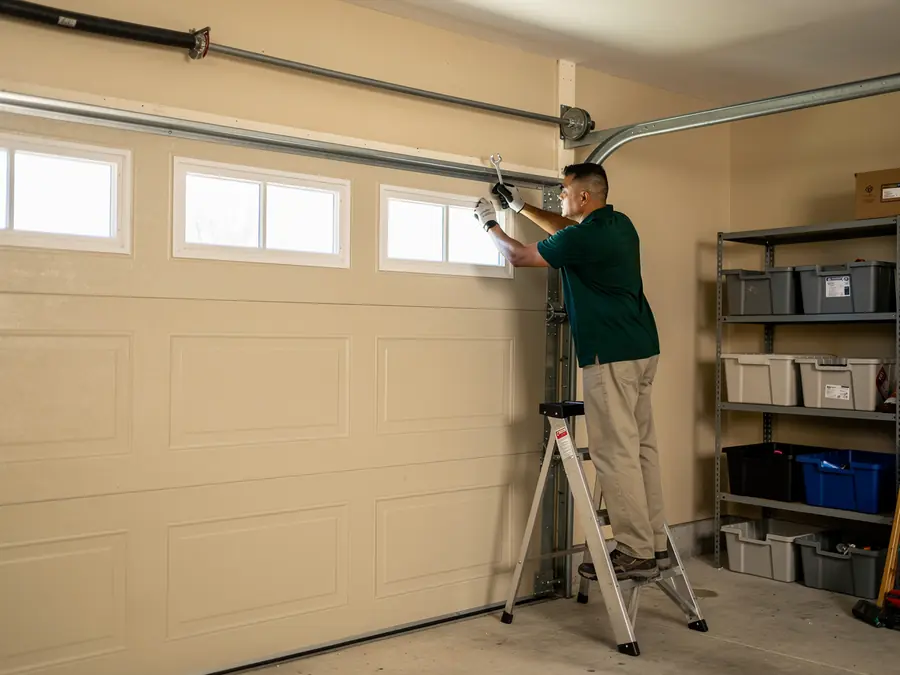
We carry torsion springs sized for the shorter 7-foot door openings common on these older single and two-car garages, plus the steel rollers and galvanized cable that wear out fastest on hardware this age. Chain-drive opener parts - sprockets, trolley carriages, limit switches - stay on the truck because so much of Oak Ridge North still runs that older generation of opener rather than a newer screw or belt unit.
What we don't carry as standard stock: low-headroom torsion conversion kits for garages with unusually tight ceiling clearance. Those get special-ordered once we've measured the opening, which can add a day or two to a job that needs one.
How We Fix It
On a 1977-era door, we start by checking whether the spring and cable system still matches the original factory spec or whether a prior repair swapped in mismatched hardware - a common find on houses this age, since parts availability has shifted several times since these garages were built. If the torsion spring has fatigued past a safe cycle count, we replace it with a correctly sized unit rather than patching around a weak one.
For chain-drive openers, we check the sprocket and chain tension before assuming the motor itself is the problem; a loose chain on a decade-old unit mimics the symptoms of a failing gear. Track alignment gets checked against the original door weight, since steel panel doors from this period are heavier than the insulated models sold today, and a track bent even slightly out of true puts extra strain on rollers that are likely already near the end of their service life.
We travel to Oak Ridge North from our Spring location, about 7 miles out, so we schedule the visit once we know roughly what the job involves rather than guessing from a phone description.
What Can Go Wrong
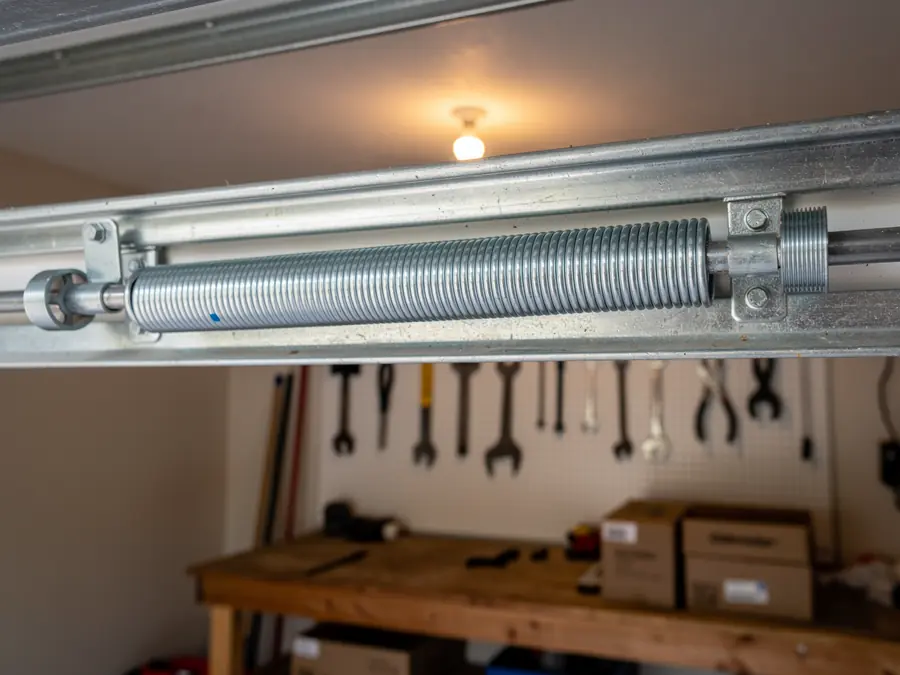
The most common failure we see on houses from this build era is a torsion spring that's simply outlived its cycle rating - these doors have had 45-plus years to wear through several springs, and a lot of them are overdue. Close behind is roller and hinge wear on the heavier steel panel doors common to late-1970s construction; they're stiffer on the track than today's lighter insulated panels, which accelerates wear on the rollers and the track itself.
On the opener side, chain-drive units from this generation develop worn sprockets and stretched chains long before the motor itself fails, which means some openers get replaced unnecessarily when a sprocket and chain service would have solved it. Cables fraying at the bottom bracket show up more here too, often tied to a track that's shifted slightly out of alignment over the decades.
We don't see much storm-related damage pattern here - this area sits in a moderate heat climate band rather than a high-wind or hail-heavy one, so most of the wear we find is mechanical fatigue from age and use, not weather.
How It Shows Up
A fatigued torsion spring usually announces itself as a door that suddenly feels twice as heavy to lift by hand, or an opener that strains and stalls partway up - the motor isn't failing, it's trying to lift a door the spring can no longer counterbalance. A worn chain-drive opener tends to show up as a grinding or slapping noise partway through the cycle, along with the door stopping short of fully open.
Roller wear on the older steel doors common here sounds different: a rhythmic squeak or thunk as each roller passes a slightly worn section of track, getting louder over weeks rather than failing all at once. A door that reverses on its own partway down, or won't close the last few inches, usually points to a track that's drifted out of alignment rather than the opener's safety sensors, though we check both.
If a cable looks frayed at the bottom bracket, that's not a wait-and-see repair - a snapped cable under tension can let a heavy steel door drop fast.
What You Pay
We don't have a flat Oak Ridge North rate to quote here, and we won't invent one. What we can say: this is a 7-mile trip from our Spring location, and most jobs on homes this age involve a spring and roller job, a chain-drive opener service, or both, rather than a full door replacement. Oak Ridge North's median household income runs noticeably higher than the broader service area average, and that does show up in the kind of work we get called for - more owners here choose to replace an aging opener outright with a quieter belt-drive unit rather than keep patching a 1980s chain-drive motor, where in other parts of the service area repair stays the more common call.
We price the job once we've seen the door and the opener, not off a phone description, since a spring job on a mismatched or previously-repaired system can run differently than a straightforward factory-spec replacement. If replacement makes more financial sense than another repair on a door this old, we'll say so rather than sell a patch that won't hold.
FAQ
Questions about this
Why does my garage door feel so much heavier to lift than it used to?
That's almost always a torsion spring losing its tension, not the opener failing. Springs are rated for a certain number of open-close cycles, and on a house built in the late 1970s, most have already been replaced once or twice. A sudden jump in how heavy the door feels by hand is the clearest early sign.
Do you carry parts for older chain-drive openers?
Yes - a lot of openers in Oak Ridge North are still chain-drive units from the 80s or 90s rather than newer belt-drive models, so we keep sprockets, chain, and limit switch parts stocked for that generation. Low-headroom conversion hardware is the one thing we typically have to special-order.
Do you have a shop or truck based in Oak Ridge North?
No - we work out of Spring, about 7 miles away, and travel to Oak Ridge North for service calls. We schedule the visit once we have a sense of the job so the trip is worth making.
Is it worth repairing an old steel panel door or should I replace it?
Depends on the door's condition once we're in front of it. A spring, roller, or cable repair is usually the cheaper fix, but if the panels themselves are dented, rusted through, or the track is bent beyond simple realignment, replacement often makes more sense than repeated patching.
Tell us what your door is doing.
We serve Spring, TX and nearby communities. Every job starts with a diagnosis, so you know what failed before any work begins.