Garage Door Service · Oak Ridge North
Garage Door Work for Oak Ridge North's 1977-Era Homes
Oak Ridge North homes date mostly to 1977, often with original torsion hardware still in place. We repair and replace doors here, 7 miles from Spring.
Stocked Parts
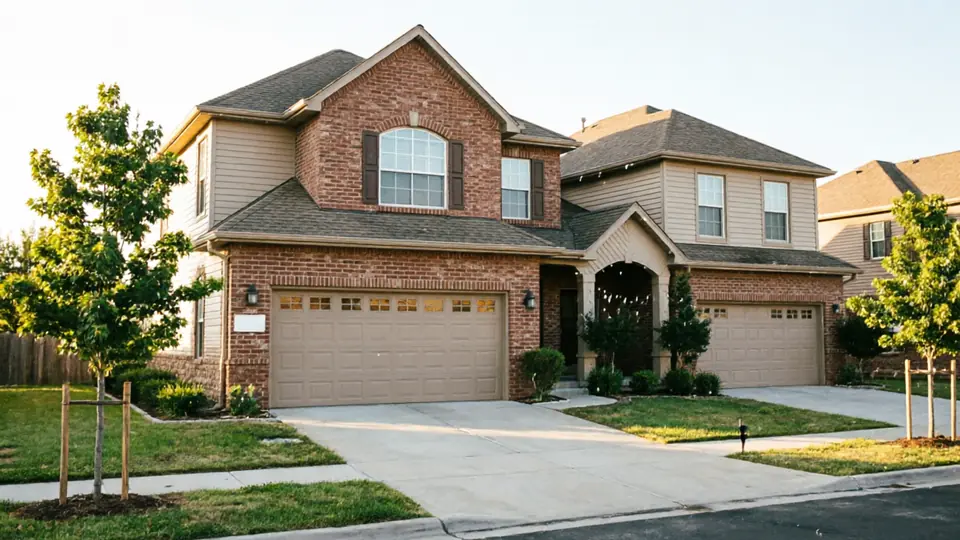
Oak Ridge North's housing stock centers on 1977, which puts a lot of doors here a decade or more ahead of the newer sections of the service area built through the 1980s and 90s. That matters for parts. A door hung in the late 1970s was more likely to ship with extension springs mounted along the horizontal tracks than the torsion springs over the header that became standard later. We carry both: extension spring sets, torsion conversion kits, the drums and cables that pair with them, and rollers sized for the older track gauge. We also stock modern opener units, since a lot of these doors are still running openers that predate current safety sensor standards. What we don't keep on the truck is anything specialty-ordered from a manufacturer that stopped making a given panel style years back - if your door needs an exact match panel, that can mean a short wait.
How We Fix It
We come out from Spring, about 7 miles to Oak Ridge North, so every visit starts with a look at what's actually original versus what's been swapped out over the years. On a house from 1977, that's usually the springs, the cables, and sometimes the whole door - track and opener get replaced more often than the structural hardware, which tends to get patched rather than redone. We test the balance first, because a door that's out of balance is what burns out an opener motor early. From there it's spring replacement, cable and drum swaps, or a full torsion conversion if the extension setup has reached the end of its service life. We don't run a branch in town, so scheduling runs through the main Spring operation - see the coverage page for how that works for Oak Ridge North specifically, or the general service page for what we handle day to day.
What Can Go Wrong
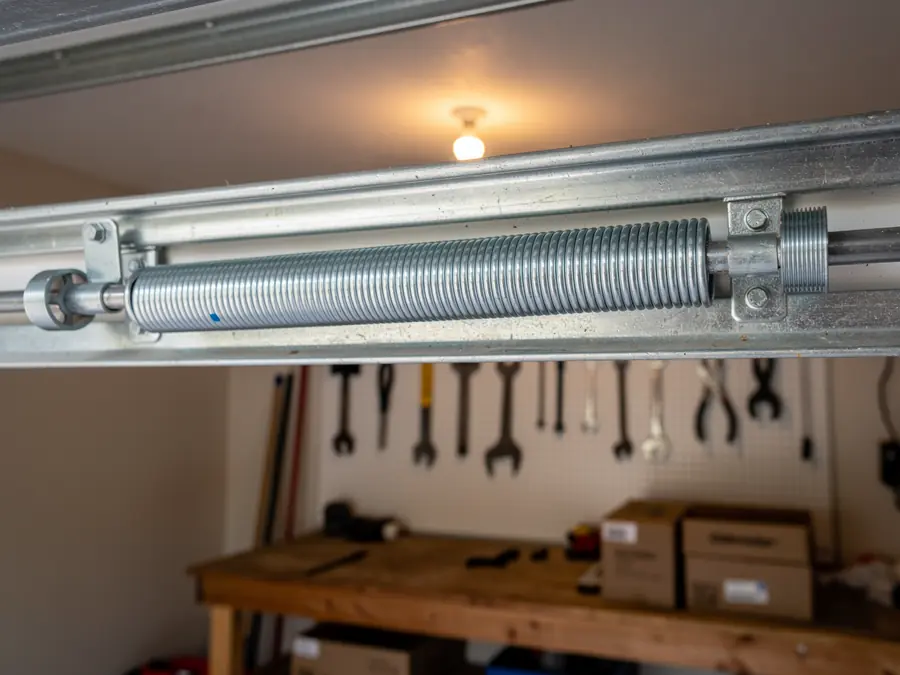
Extension springs from the 1977 era fail differently than torsion springs do - they stretch, lose tension unevenly, and when they let go they can snap with the cable still attached, which is more dangerous to be standing near than a torsion failure overhead. That's the big one on original hardware here. Beyond the springs, moderate heat exposure over decades dries out nylon rollers and hardens the rubber seals at the bottom of the door, so you get binding in the track and daylight gaps at the threshold that weren't there when the door was new. Cables fray at the drum end from decades of the same rub point. None of this is unique to one house - it's what happens to hardware that's been doing its job quietly for close to fifty years without ever getting a full inspection. The honest limitation: if the door panel itself has rusted or delaminated at the seams, repairing the spring and cable won't fix the underlying problem, and we'll tell you that instead of patching around it.
How It Shows Up
Most calls start the same way: the door stops a few inches off the ground and won't go further, or it reverses itself partway up. That's usually a spring that's lost tension, not an opener problem, even though the opener is what people blame first. A grinding or popping sound right before the door sticks is often a roller riding rough in a worn track, which is common on hardware from the 1977 window that's never been swapped. If the door slams the last foot on the way down instead of settling, that's a spring doing less work than it should, putting all the load on the opener and the track brackets. A door that feels heavy to lift by hand, with the opener disconnected, almost always points back to spring tension rather than anything electrical.
What You Pay
We don't post a price list, because what a job costs depends on what's actually wrong and what parts the door needs, and that only gets answered with the door in front of us. What we can say is that the median household income across Oak Ridge North runs notably higher than the broader service area median of $82,810, and in practice that shows up as more homeowners choosing to replace a tired original door outright rather than keep patching 1977 hardware piece by piece. Repair still makes sense when the panel and track are sound and it's just springs or cables. Replacement makes more sense once the door itself - not just the hardware on it - is the problem. If a part isn't something we carry on the truck, factor in a short lead time; we won't quote a same-day fix on something we'd have to special-order.
FAQ
Questions about this
Is it normal for a door from the 1970s to still have its original springs?
It happens more than you'd think. Springs don't have a fixed shelf life - they fail based on cycle count, not age alone - so a door that doesn't get opened many times a day can run on 1977 hardware for a long time before anything lets go. When it does fail, it's usually sudden.
Do you have a branch in Oak Ridge North?
No. We work out of Spring and travel the roughly 7 miles to Oak Ridge North for jobs here. There's no local depot or showroom in town, so scheduling and parts both run through the Spring operation.
Why does my door feel heavier to lift than it used to?
That's almost always the spring losing tension over time, not the door itself getting heavier. On original 1977-era hardware, extension springs stretch and weaken gradually, so the opener starts carrying more of the load than it's built for.
Should I repair or replace an original door?
If the panel and track are still sound, repairing the springs or cables usually makes sense. If the door itself has rusted, warped, or delaminated at the seams, replacement is the better call - patching hardware won't fix a failing panel.
Tell us what your door is doing.
We serve Spring, TX and nearby communities. Every job starts with a diagnosis, so you know what failed before any work begins.