
Cable Repair · Porter Heights
Cable Repair for Porter Heights' Older Extension-Spring Doors
Cable repair for Porter Heights homes built around 1978 - older extension-spring setups with pulleys and cable drums that wear differently than newer torsion systems.
Why This Fails Locally
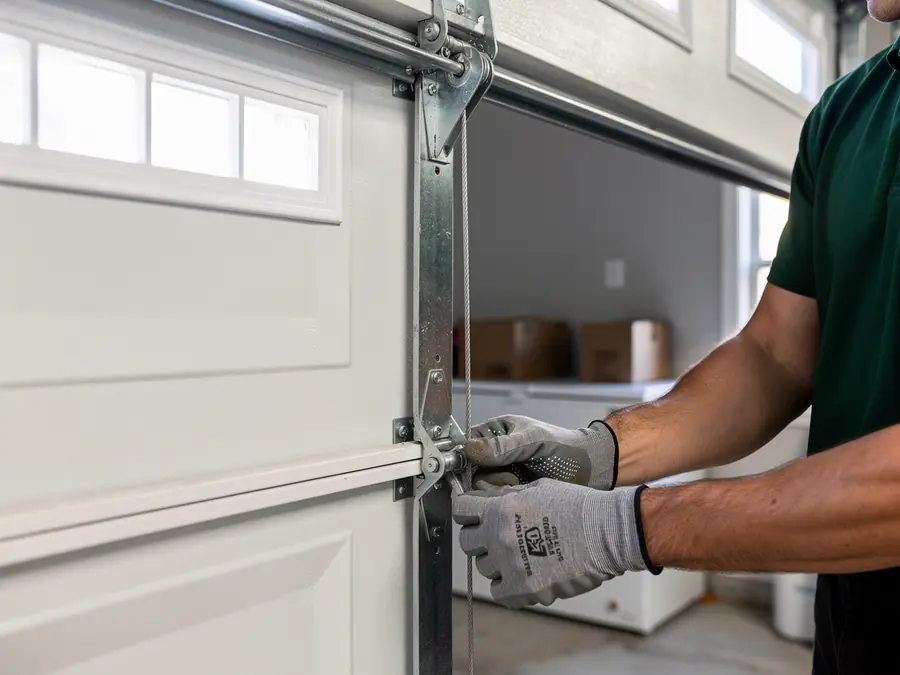
Porter Heights sits about 7 miles from our shop in Spring, and the typical house here went up around 1978 - older than a lot of the newer construction scattered through the wider service area, where builds run anywhere from 1971 to 2011. That matters for cables specifically: a house from the late 1970s is far more likely to have an extension spring system than a torsion setup. Extension springs stretch along the horizontal tracks and route their lift cables over pulleys at the back of the door. That pulley-and-drum arrangement wears the cable differently than a torsion drum does - it frays where the cable bends around the pulley sheave, not just where it winds onto the drum. We see more pulley-groove wear and more frayed strands near the bottom bracket on these older setups than on newer torsion jobs. The galvanized coating on a cable that age has usually thinned enough that surface rust sets in faster once it starts, and once one strand goes, the rest follow fast under load. If your door is original to a 1978-era build and nobody's touched the cables, they're due, whether or not anything looks obviously wrong yet.
Doing It Yourself
Don't try to replace or re-seat a lift cable yourself while the spring is still under tension. On an extension spring door, that tension is held by the stretched spring itself, and there's no safe way to release it without the right bars and a clear idea of what you're doing. A cable that slips off a pulley or snaps while the door is partway open can let the door drop and swing the loose cable hard enough to cause real injury. The one thing you can safely do is look: with the door closed and the opener disconnected, check both cables for visible fraying, rust bloom, or a cable that's come off its drum or pulley groove. If you see any of that, leave the door down, don't run the opener, and call it in rather than working around it. That's the honest limit here - this isn't a tighten-a-bolt repair, and treating it like one is how people get hurt or turn a $200 fix into a bent track and a new door.
How It Shows Up
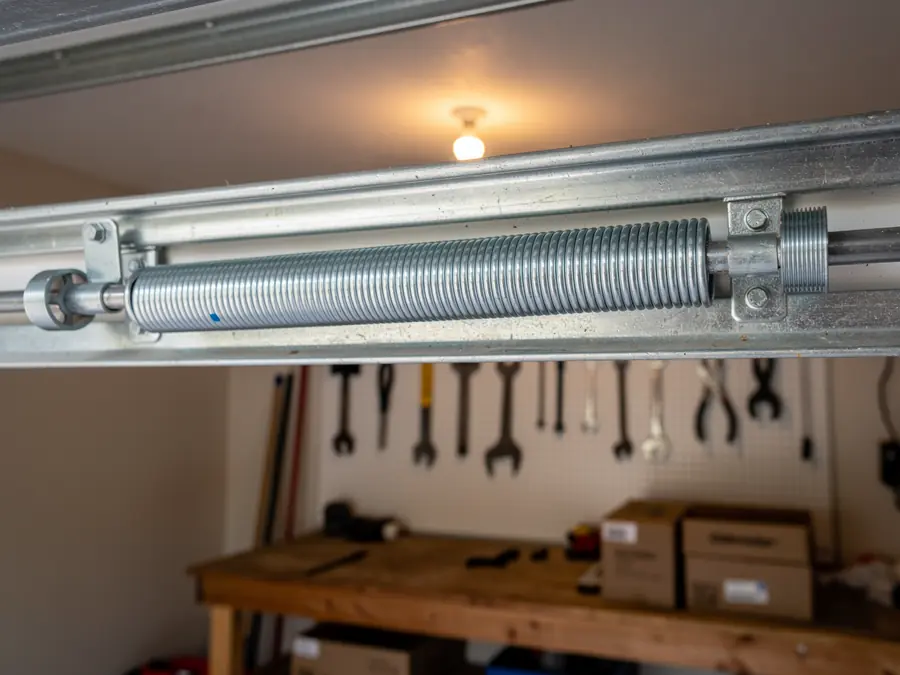
On these older extension-spring doors, cable trouble usually starts quiet. You'll notice the door hanging a little crooked when it's down, tilted toward whichever side has the weaker cable. Sometimes it's a scraping or popping sound right as the door starts to lift - that's a strand catching on the pulley instead of running smooth. A door that used to open evenly but now jerks or stutters partway up is often a cable that's started to unwind off the drum on one side. In the worst case, one cable lets go entirely and the door drops hard on that corner, sometimes bending the track or racking the panel. If you've got an opener, it may strain, reverse, or trip its safety sensor repeatedly before a cable actually fails - the motor's fighting an imbalance it can't feel directly.
How We Fix It
We come out from Spring, about 7 miles in, and start by checking both cables end to end - the groove where they ride the pulley, the drum winding, and the fittings at the bottom bracket. On a 1978-era extension system we're usually replacing both cables together even if only one shows damage, since they're under matched tension and a mismatched pair just shifts the wear to the new side fast. We also check the pulleys themselves; a grooved or cracked pulley wheel will chew through a brand new cable just as fast as the old rusted one did. If the springs themselves are original and showing their age alongside the cables, we'll flag that separately rather than bundling it in - sometimes it makes more sense to deal with both at once, sometimes the springs still have life left and only the cables need doing. We test the balance and travel before we leave, since a cable swap on an older door is also a good time to catch anything else that's been quietly getting worse.
How to Book
We cover Porter Heights from our Spring location, roughly 7 miles out, so getting a truck to you isn't a special trip. Tell us the house is in Porter Heights and roughly how old it is if you know - that one detail helps us bring the right cable length and drum style, since the older extension setups common here take different parts than the torsion systems in newer sections of the service area. You can see the areas we cover at our coverage page, or if you're looking into other door work for a Spring address specifically, that's handled on our Spring cable repair page.
FAQ
Questions about this
Is my 1970s garage door likely to have extension springs instead of torsion?
Likely, yes. Houses built around the late 1970s in this area commonly used extension spring systems with cables running over pulleys, rather than the torsion-spring setups more common in newer construction. If your door's original to the house, check for springs stretched along the horizontal tracks rather than a single spring above the door - that's the extension-style setup.
Can I just replace one cable if only one looks frayed?
We don't recommend it. Cables on an extension system wear as a matched pair under equal tension. Replacing just the damaged one usually means the new cable outlasts the old one by a wide margin, and you're back out here again sooner than you'd like. We replace both at the same visit.
How fast can someone from Spring get out to Porter Heights?
We don't quote a fixed response time, since it depends on the day's schedule. Porter Heights is about 7 miles from our Spring location, so it's a short run once we've got a truck free - call and we'll give you a real window for that day.
Tell us what your door is doing.
We serve Spring, TX and nearby communities. Every job starts with a diagnosis, so you know what failed before any work begins.