
Panel Replacement · Porter Heights
Panel Replacement for Porter Heights' 1970s Garage Doors
Porter Heights homes mostly went up around 1978, a decade before the service area's 1989 median. That build era shapes which panels crack first and how we replace them.
Why This Fails Locally
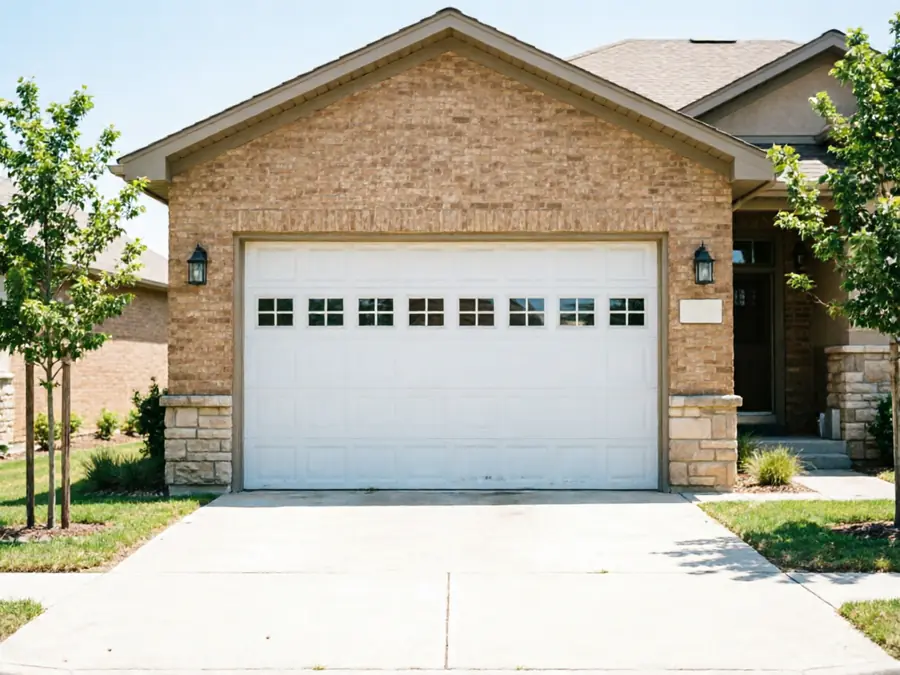
Porter Heights sits apart from a lot of the newer construction in the Spring service area. Where the wider area's housing stock runs 1971 to 2011 with a median around 1989, Porter Heights itself centers closer to 1978. That decade matters for panels specifically. Builders putting up garage doors in the late 1970s were using steel sections that were thinner than what you'd get today, often two-piece raised panel designs bolted to a single torsion spring setup that was never rated for the double-car openings some owners later widened. Forty-plus years of expansion and contraction in a moderate heat climate band does the rest. Steel doesn't rust out here the way it does in wetter regions, but it does fatigue at the hinge stiles and the bottom panel seam, especially where water has pooled at the slab edge over the decades. On a lot of these doors, one bad panel isn't really a standalone problem - it's the first sign that the rest of the run is close behind, because they all came off the same manufacturing batch and have taken the same weather load for the same number of years. Replacing the one panel that's visibly bent often reveals a second one already stress-cracked at the roller bracket once we pull the section.
Doing It Yourself
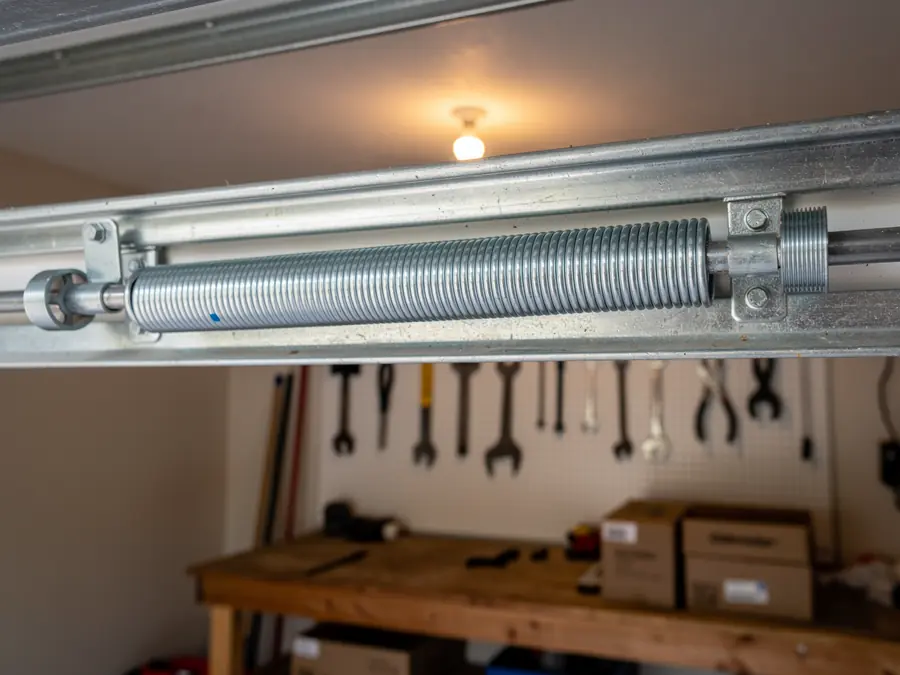
A single cracked or dented panel on a late-1970s door isn't always a quick swap. The sizing on doors from that era doesn't always match what's stocked at a hardware counter today, and bolt patterns for the hinge stiles can be a different gauge than current factory standard. If you try to source a universal panel and bolt it into a 1978 frame, you can end up with a door that closes unevenly because the new section is stiffer or a fraction of an inch off from the original run. We're honest about where DIY makes sense: tightening loose hinge bolts or replacing a roller is reasonable weekend work. Swapping a structural panel on a door this old usually isn't, because getting the match wrong puts uneven load on a torsion spring that's already decades past its rated cycle count.
How It Shows Up
On Porter Heights doors, panel failure usually starts low - the bottom section takes the brunt of slab contact, lawn equipment bumps, and years of expansion in the heat. You'll see a horizontal crease across the panel face, or the seam between two panels starting to separate at one end while the other end still looks fine. Sometimes it's less obvious: the door looks intact but doesn't sit flush against the weatherstrip anymore, which usually means the panel itself has bowed slightly from sun exposure over the years. On the roughly 459 households in this pocket of the service area, we see this cluster around doors that have never had a panel touched since the house was built - the original steel, original spring, just slowly giving up.
How We Fix It
We come out from Spring, about 7 miles for most Porter Heights addresses, so there's no separate dispatch fee tied to distance for this stop. On site, we check whether the rest of the panel run matches what's available to order or whether the full door is a better call than patching one section into an otherwise 40-year-old frame. If it's a single clean panel swap, we match the section width and hinge spacing to what's actually on your door, not a generic size, and we check the torsion spring's cycle rating while we're in there since a new heavier panel changes the load math slightly. If the panel damage is isolated and the rest of the door is sound, we don't push a full replacement just because the door is old - sometimes the honest fix really is the one section.
How to Book
If you're in Porter Heights and have a panel that's dented, cracked, or pulling away from the seam, get in touch through our Porter Heights coverage page and we'll get a truck scheduled from Spring. If what you're after is a broader look at panel replacement across the service area, including what it typically involves on newer builds, that's covered on our Spring panel replacement page.
FAQ
Questions about this
Are garage door panels from the 1970s still available to order?
Not usually as an exact match from the original manufacturer. We work with current suppliers to find a panel close in width and hinge spacing, and in some cases that means replacing more than one section so the door run stays even. We'll tell you up front if your door's measurements are hard to match before ordering anything.
Does one bad panel mean the whole door needs replacing?
Not automatically. If the rest of the sections and the spring are sound, a single panel swap can hold for years. We check the whole door on site rather than assuming, because pushing a full replacement when one section will do isn't a fix we're interested in selling.
Why does the hardware on older Porter Heights doors matter for a panel swap?
Doors from the late 1970s often ran lighter steel panels on a single torsion spring sized for that lighter load. Swap in a heavier modern panel without checking the spring, and you can overload hardware that was already near the end of its rated cycles.
Tell us what your door is doing.
We serve Spring, TX and nearby communities. Every job starts with a diagnosis, so you know what failed before any work begins.